AAPI Caregiver Burnout: When Cultural Expectations Add to the Weight
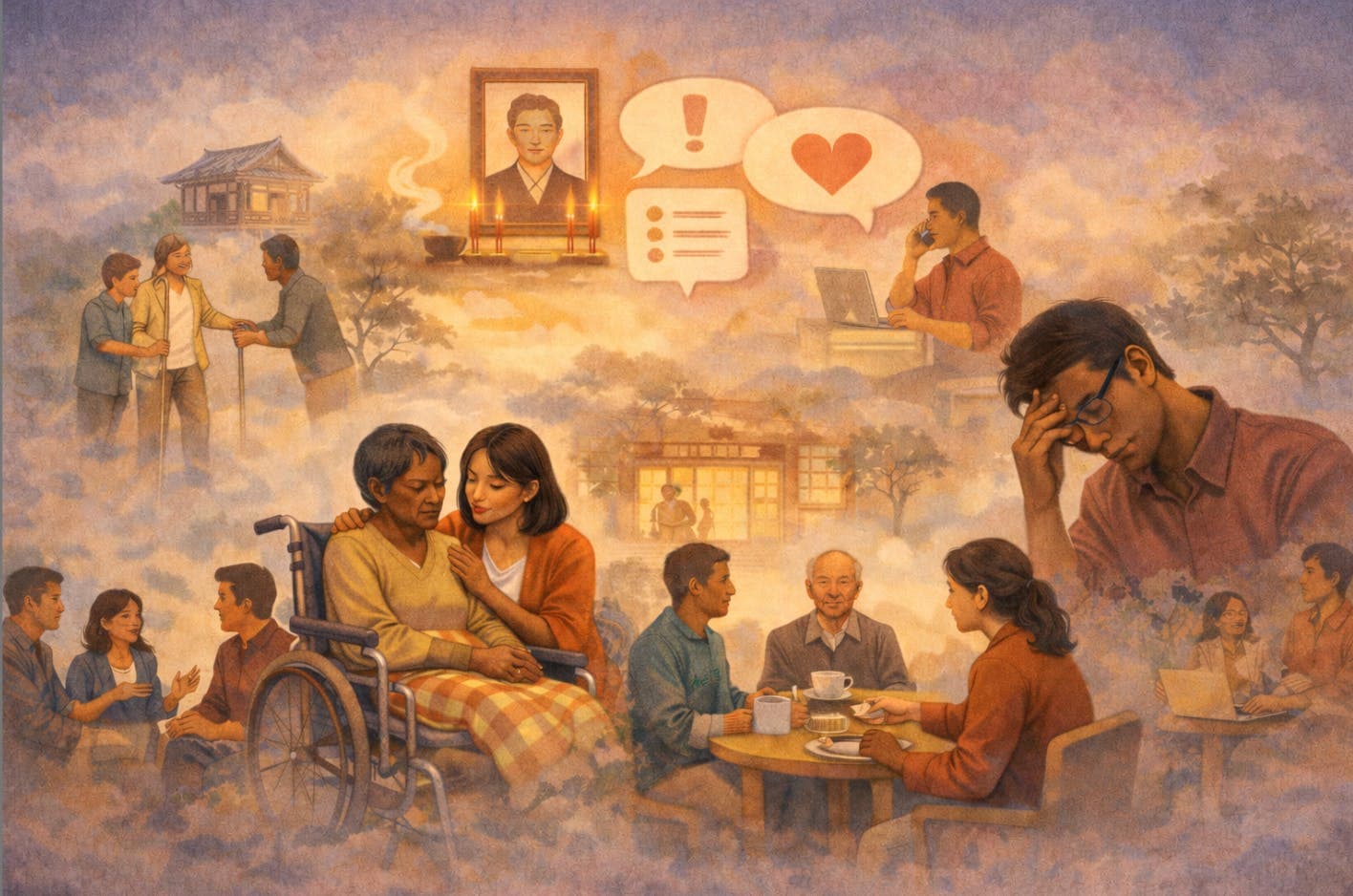
If you’re an AAPI caregiver reaching the edge of your limitations, you may not call what you’re carrying “burnout.” You might refer to it as what’s expected, just what needs to be done or even your duty.
But somewhere between coordinating appointments, translating medical information, managing family dynamics, experiencing a large variety of intense emotions, and keeping everything together, there may also be exhaustion, guilt, and resentment.
And perhaps you’ve wondered: Why does this feel so heavy? Is it just me?
The Cultural Overlap
Caregiver stress is well documented. Research shows family caregivers are at increased risk for depression, anxiety, sleep disturbance, and chronic health issues (Schulz & Sherwood, 2008). This emotional toll likely doesn’t surprise you.
But what might surprise you, is that for many AAPI caregivers, the strain is magnified by cultural elements. Laced with unspoken expectations about how they “should” feel, behave, and cope. These invisible pressures are internalized from an early age and often accumulate over time.
In cultures where supporting elders and honoring family are held as central values, stepping back or asking for help may feel like a move against values, rather than an act of advocacy. This can make it harder to set boundaries, ask for help, or admit overwhelm. Studies show that AAPI caregivers often delay seeking outside support due to stigma and beliefs that family matters should stay within the family (Kim et al., 2011).
Emphasizing collective well-being over individual needs is a source of pride and connection. But, it can also mean that caregivers tend to:
- Suppress personal feelings of overwhelm to avoid burdening others
- Minimize their own emotional needs in service of caretaking roles
- Experience guilt or shame when seeking external support
I want to be clear that AAPI culture isn’t “the problem,” but it’s an important nuance to the experience of being a caregiver. Our cultural expectations impact our well-being and can amplify an already demanding role. This can be felt even greater when with a group that doesn’t understand the inherent cultural values and lessons that come with being AAPI.
The Model Minority Myth and Invisible Strain
The emotional toll of caregiving, from worry to constant vigilance to anticipatory grief, is universal. But AAPI caregivers also navigate broader stereotypes that downplay their needs. The stereotype that AAPI individuals are self-sufficient and high-achieving can lead others to overlook stress and burnout, and contributes to underutilization of mental health services and minimized emotional distress (Sue et al., 2019). This can make caregiving struggles feel individual rather than contextual.
From an Internal Family Systems (IFS) informed lens (Schwartz, 1995), many caregivers carry strong “manager” parts: the responsible, high-functioning, self-sacrificing parts that keep everything running. These parts often develop early, shaped by cultural messages about loyalty and resilience. They are protective and admirable.
But when they run the system alone for too long, other parts, like the overwhelmed, grieving, resentful, or lonely parts, don’t get space to be heard.
And without space, they don’t disappear. They just get further compartmentalized, suppressed, quiet or heavy.
If You’re Reading This and Thinking…
- “I love my family, but I feel alone in this.”
- “I don’t know how to talk about this without sounding ungrateful.”
- “I want support, but I don’t want to have to explain my culture.”
You are exactly who this conversation is for.
You deserve a space where:
- Cultural values are understood, not questioned.
- Obligation and love can coexist.
- You don’t have to minimize your stress to honor your family.
- You can explore boundaries without shame.
An Affinity Space for AAPI Caregivers
What many AAPI caregivers need is not just support — but support that resonates with their cultural experience. I created an AAPI Caregiver Support Group as a culturally attuned community whose caregiving is affected by internalized expectations that share their emotional responsibility they bear. It’s an informed space where we integrate:
- Somatic tools to gently ground and provide nervous system relief.
- IFS principles to understand protective parts and caregiver identity.
- Trauma-informed care to acknowledge intergenerational and migration stress.
- Relational support to reduce isolation and normalize complexity.
This is not a space where culture is ignored. It’s a space to hold it with more clarity and compassion— alongside your own humanity.
If you’ve been diligently carrying more than most people see… If you’ve been strong for everyone else… If part of you is tired of doing this alone…
Then this group is for you.
Please message me for a free consultation to meet and discuss your experience and if this group or culturally attuned therapy is right for you.
About the Author

Caitlin Blair, LCSW is a California-based therapist (#128351) who works with AAPI and multicultural adults navigating caregiving stress, burnout, family expectations, and identity across the lifespan. She holds a Master’s in Social Welfare from the University of California, Berkeley, with a focus on adult health and well-being, along with a Certificate in Aging. Her clinical training includes Narrative Therapy, Motivational Interviewing, Trauma Conscious Yoga Method therapy, and Internal Family Systems (IFS). She has also completed Level 1 Gottman Method Couples Therapy and continues advanced training in EMDR and Brainspotting.
Caitlin’s approach integrates evidence-based modalities with cultural humility, honoring both the strengths and complexities of intergenerational family dynamics. Through individual therapy and her AAPI caregiver support group, she creates spaces where responsibility, cultural values, and personal well-being can coexist with greater clarity and compassion.
References
- Schulz, R., & Sherwood, P. R. (2008). Physical and mental health effects of family caregiving. American Journal of Nursing. Available at https://pmc.ncbi.nlm.nih.gov/articles/PMC2791523/
- Nguyen, D., & Bornheimer, L. A. (2014). Mental health service use types among Asian Americans with a psychiatric disorder. Journal of Behavioral Health Services & Research. https://pubmed.ncbi.nlm.nih.gov/24402440/
- Internal Family Systems Therapy overview (Schwartz, 1995). Guilford Press. https://www.guilford.com/books/Internal-Family-Systems-Therapy/Schwartz-Schwartz-Sweezy/9781462541461
- Online Readings in Psychology and Culture — Asian American mental health stigma & service utilization overview. http://scholarworks.gvsu.edu/orpc/vol3/iss1/4